Manufacturer catalogs list technical specifications without pricing context. Procurement managers must work out cost variables before they can budget accurately. Understanding what drives the pneumatic pile driver price means looking past the base unit to impact energy ratings, compressor compatibility, and application-specific engineering. Buyers who account for these factors early avoid under-specifying equipment or paying for capacity they don’t need.
Primary Factors Influencing Pneumatic Pile Hammer Cost
The baseline for any pneumatic pile driver price comes from physical manufacturing inputs, not market positioning. Specific mechanical dimensions correlate directly with production expenses, which is why quotes vary between models.
Impact Energy and Bore Size Specifications
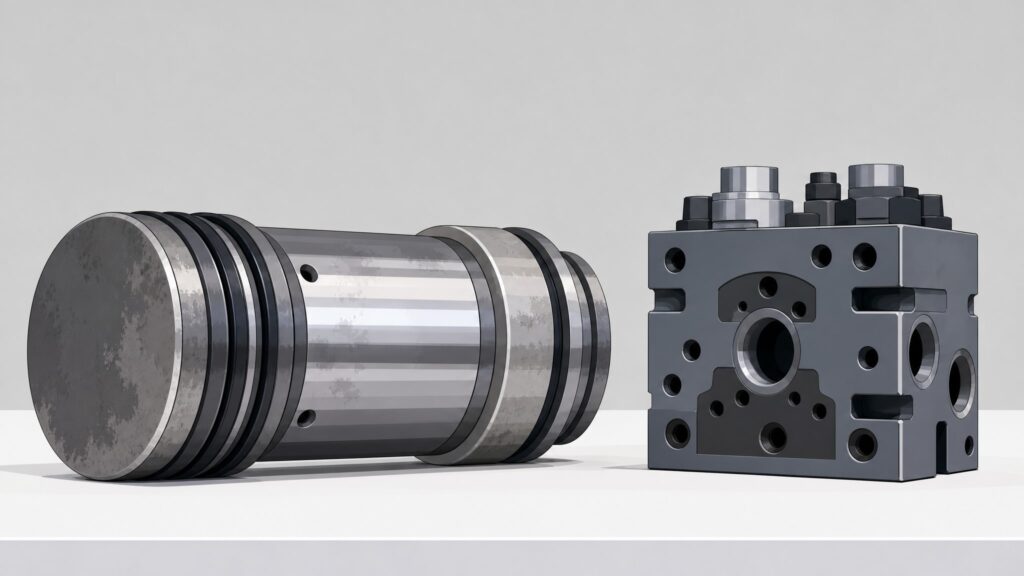
Impact energy and bore diameter are the fundamental determinants of manufacturing complexity and raw material volume in heavy-duty driving equipment. A larger cylinder bore needs more high-grade steel and more precision machining time to hold tolerances under cyclic loading, and that raises the base fabrication cost. Higher impact energy ratings demand heavier pistons and reinforced valve assemblies, adding weight and material density to the final assembly. Stepping up to a higher energy class brings exponential cost increases rather than linear ones, because structural integrity and heat dissipation requirements compound together.
Material Grade and Manufacturing Standards
Industrial-grade steel alloys and specialized heat treatments cost more than lighter commercial variants, but they extend service life in abrasive conditions. Equipment built for continuous infrastructure work uses chromium-molybdenum steels and nitrided surfaces that resist scoring and fatigue failure far better than standard carbon steel. These metallurgical choices raise upfront material costs but prevent the premature cylinder wear that would otherwise force frequent rebuilds. Precision machining standards also affect the pneumatic pile hammer cost: tighter tolerances improve air seal efficiency and cut internal leakage during operation.
Air Compressor Requirements and System Integration Costs
The hammer is only one part of the total system investment needed for pile installation. Undersized compressors stall and reduce blow energy. Oversized units burn more fuel and inflate the initial outlay without improving performance.
Matching CFM and PSI to Hammer Specifications
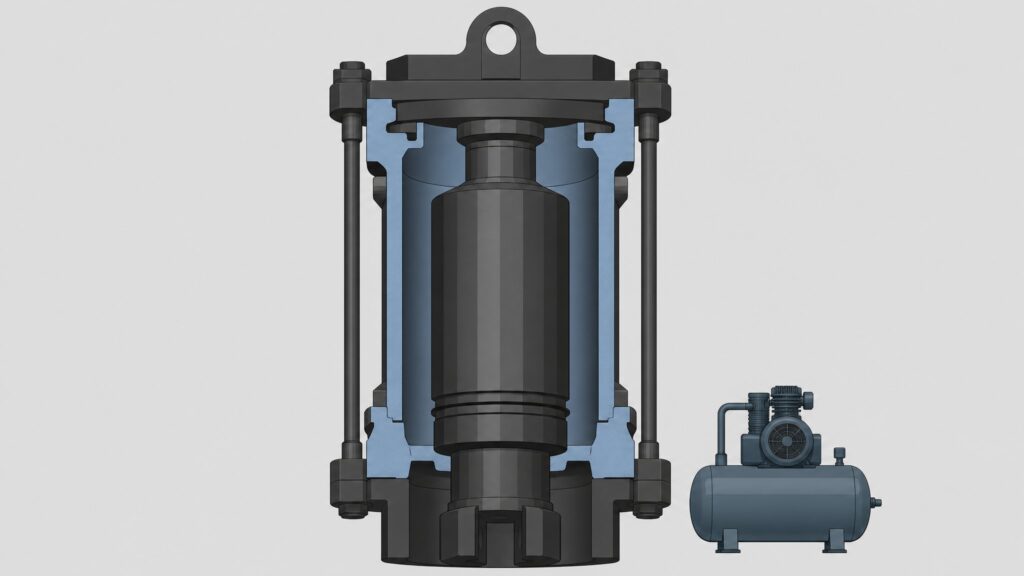
Pneumatic pile drivers need matching air compressor output in CFM and PSI to hit rated impact energy. Mismatched systems typically lose 20-40% efficiency and wear out faster. Compressor selection has to account for pressure drop across hoses and fittings, not just the theoretical requirement at the tool inlet. Running below specified pressure reduces piston velocity and penetration rate, which can double labor time per pile and erase any savings from buying a smaller compressor. Oversizing brings its own problems: excessive moisture in the lines, and shorter maintenance intervals on the compressor from short-cycling or unloaded running.
Auxiliary Equipment and Hose Assembly Expenses
Specialized high-pressure hoses, quick-release couplings, and inline lubrication systems are often left off base hammer quotes, but they’re essential for safe operation. Standard industrial air hose doesn’t have the abrasion resistance or burst pressure rating pile driving needs, especially where lines drag across concrete and rebar. Couplings have to match both flow capacity and locking mechanism standards, or they risk accidental disconnection under load. Properly specified for site durability and safety compliance, these auxiliary components can account for a significant share of the total pile driving machine price.
Application-Specific Pricing Variables
Equipment for guardrail posts differs fundamentally from machinery built for deep foundation piling, in both scale and engineering approach. GAYK Turkey manufactures specialized pneumatic pile drivers and rams for guardrail and photovoltaic installations, an example of application-specific engineering that departs from general-purpose foundation hammers.
Guardrail and Photovoltaic Installation Demands
Lightweight rams used for solar arrays and highway safety barriers prioritize portability and rapid repositioning over raw driving force. These units have compact cylinders and reduced mass so a single operator can handle them on uneven terrain or along roadways. The cost structure reflects that focus on ergonomics and speed rather than maximum energy transfer per blow. Buyers evaluating rams for photovoltaic projects should expect lower base prices than foundation equipment, though mounting brackets specific to a post profile can add to the configuration cost.
Heavy Infrastructure and Foundation Piling
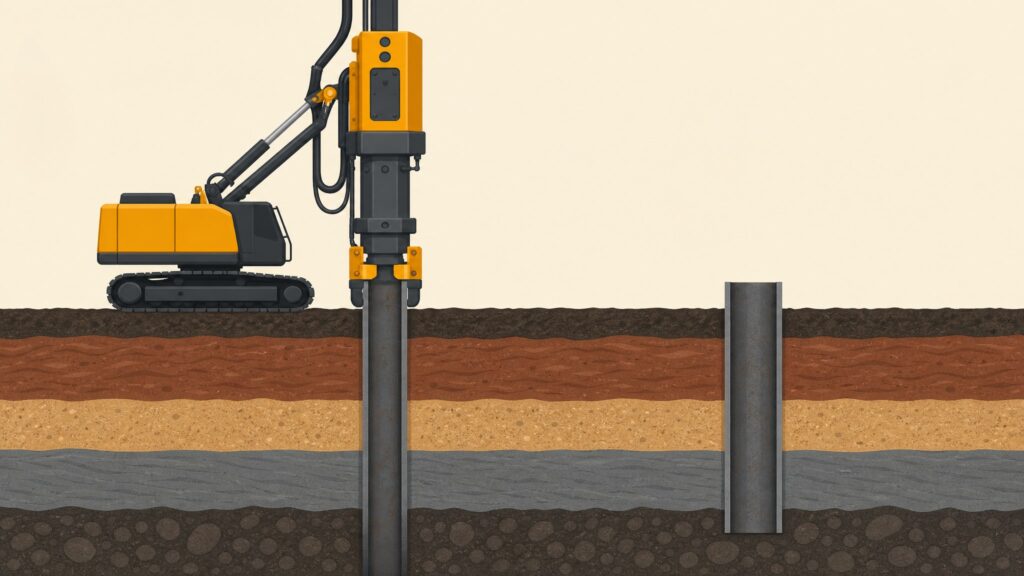
Deep foundation piling demands construction that sustains high-energy impacts over extended duty cycles without thermal degradation. These machines use larger air chambers, reinforced guide rods, and integrated silencing systems, all of which add manufacturing cost. Adapter plates for various pile cross-sections push the industrial pile driver cost past the standard hammer body. Here the engineering focus shifts to reliability under continuous load and compatibility with large-diameter steel or concrete piles driven to significant depths.
New vs. Refurbished Equipment Valuation
Refurbished equipment can save money, but it brings variables that need weighing against project timelines and risk tolerance. It doesn’t suit buyers who need guaranteed availability and full warranty coverage for critical-path activities on fixed-schedule infrastructure contracts.
Certified refurbished units go through inspection and have wear components replaced, but their remaining service life depends heavily on prior usage and maintenance history. Warranty coverage on rebuilt equipment typically runs for fewer months and covers fewer components than a new-machine warranty. Depreciation curves for pneumatic hammers vary by brand reputation and parts support, which makes resale value hard to predict for lesser-known manufacturers. Evaluating an air pile driver quote for used equipment means checking serial numbers, service records, and current spare parts availability, so you don’t end up with an obsolete asset.
Operational Efficiency and Long-Term Value
The purchase price is only the entry point for total cost of ownership in pile driving operations. Higher-efficiency designs justify a premium through measurable cuts in labor hours, fuel consumption, and downtime across the equipment’s life.
Blow Rate and Penetration Speed
A higher blow rate can justify a higher upfront pneumatic pile hammer cost by cutting labor hours and compressor runtime per pile. Faster penetration means more piles installed per shift, which lowers the unit installation cost even when equipment rental or depreciation runs higher. Breakeven points should be calculated against your typical soil conditions and crew sizes, not read off a spec sheet in isolation. Slow-driving cheap equipment often costs more in accumulated labor and fuel than a faster, pricier machine does on a productive site.
Maintenance Intervals and Spare Parts Availability
Standardized spare parts and accessible service networks lower total cost of ownership compared to proprietary or obsolete designs that create supply chain dependencies. Seal kits, valves, and pistons should be available ex-stock or with short lead times, to keep unplanned downtime to a minimum. Manufacturers with documented service procedures and common fastener standards allow field repairs that proprietary systems can’t accommodate. Reviewing pneumatic pile driver specifications alongside parts catalogs shows whether long-term support actually matches the claimed performance.
Requesting an Accurate Air Pile Driver Quote
Vague inquiries only get you estimated ranges, and those lack the precision project budgeting and equipment selection need. Detailed technical submissions let manufacturers recommend correctly sized equipment and give firm pricing valid for procurement planning.
Essential Technical Data for Suppliers
Accurate quoting for pile driving equipment needs geotechnical soil reports and pile specification sheets, since ground conditions decide whether standard or high-energy models are necessary. A submission should include pile material, cross-sectional dimensions, wall thickness, and required embedment depth, so the hammer can be sized properly. Soil density data, SPT N-values, or cone penetration test results show whether standard blow counts suffice or a high-energy variant is mandatory. Omitting these details forces suppliers to quote conservatively, or to assume a worst case, which inflates the proposed pneumatic pile driver price for no reason.
Site Conditions and Soil Reports
Ground conditions determine hammer size, but also accessory needs like pilot drills or pre-augering attachments. Rocky strata may call for hardened drive caps or specialized bits that add to the configuration cost. High water tables or cohesive soils affect extraction requirements and may mandate separate pulling equipment. Comprehensive site investigation data lets suppliers configure complete systems, rather than sell a standalone hammer that turns out inadequate once it’s on site. Buyers ready to proceed should request a detailed quote with all relevant geotechnical documentation attached.
Regional Market Considerations and Logistics
International procurement brings logistics costs and regulatory requirements that affect the final landed price beyond factory gate values. Buyers sourcing from GAYK Turkey can access multilingual support and international shipping for infrastructure projects across Europe, the Middle East, Asia, and Latin America.
Shipping weight and dimensional constraints affect freight costs significantly for heavy pile driving equipment headed to remote sites. Import duties, VAT, and customs clearance fees vary by destination country and trade agreement, sometimes adding a substantial percentage to the invoice value. Regional compliance standards for noise emissions, pressure vessel certification, or electrical safety may require modifications that affect both pricing and lead times. According to the manufacturer, sourcing from established hubs like Turkey can offer competitive pricing compared to local distributors, though buyers still need to weigh transit times and possible tariffs against total acquisition cost. Those looking beyond pneumatic systems can review the complete pile driver range to weigh hydraulic or diesel options against their own regional constraints.