Pneumatic pile driving equipment operates under extreme impact loads that degrade internal components over time, regardless of operator skill or maintenance diligence. Finding a reliable pile driver spare parts supplier means distinguishing between generic catalog vendors and manufacturers who engineer components for specific hammer models. Contractors managing road safety barriers, solar farm foundations, or civil engineering piling projects face distinct wear patterns that call for application-specific replacements rather than universal substitutes. GAYK Turkey manufactures pneumatic pile drivers, pile extractors, drilling cars, and rams built for guardrail and photovoltaic installation, giving contractors direct access to model-specific spare parts. Sourcing directly from the manufacturer keeps metallurgical compatibility and dimensional accuracy in check in a way aftermarket alternatives cannot guarantee for high-stress pneumatic systems.
Critical Piling Machine Wear Parts Requiring Regular Replacement
Impact fatigue degrades specific components inside pneumatic hammers. Catching these high-stress items before they fail outright protects both the equipment and the project timeline. Operational hours and ground resistance data predict when piling machine wear parts need reordering better than a calendar ever will, since site conditions vary too much for fixed schedules to hold. Waiting for visible damage often means the cylinder or valve block has already picked up secondary scoring, and that raises repair costs fast.
Pneumatic Hammer Pistons and Valves
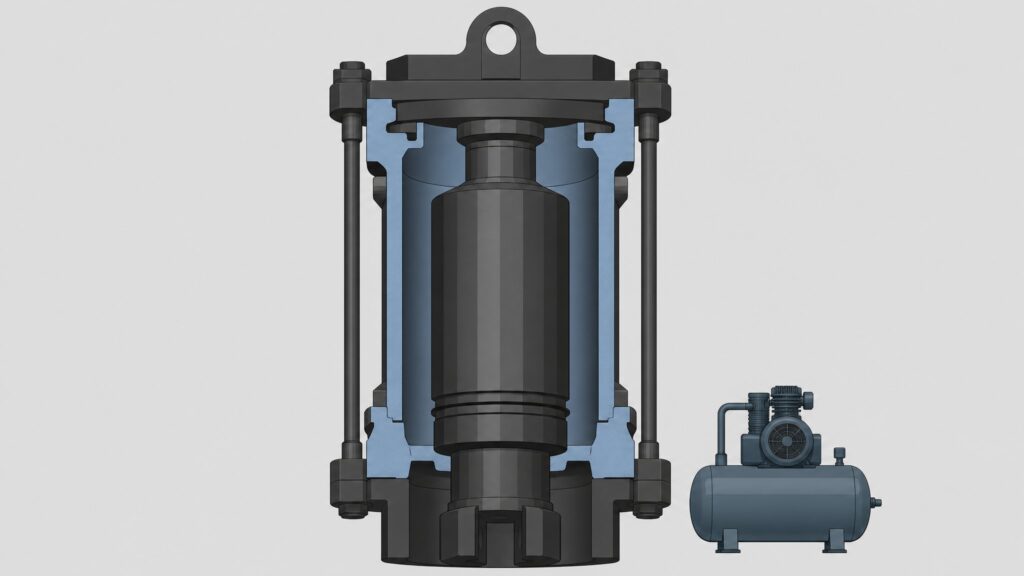
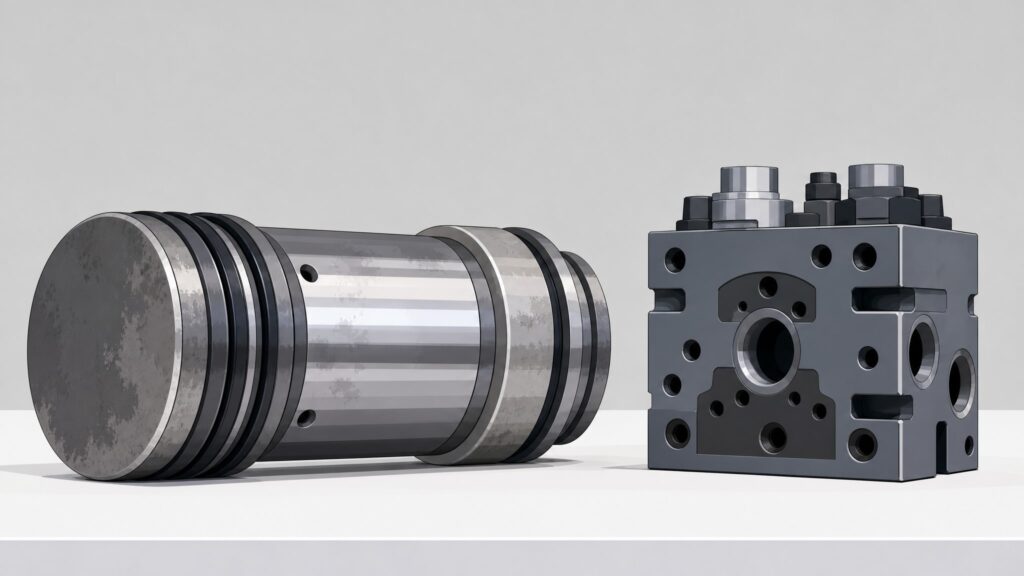
The piston is the primary energy transfer mechanism in every air pile hammer, taking thousands of high-velocity impacts per hour against varying soil densities. Micro-fractures form along stress points long before the component shows external wear. That’s why scheduling replacement by cumulative blow count, not appearance, prevents sudden seizure. Valve assemblies control airflow timing and pressure distribution. Even minor erosion in valve seats lets compressed air bypass the piston chamber and cuts hammer efficiency.
Direct manufacturer sourcing avoids the dimensional tolerances found in generic aftermarket parts, tolerances that can cause accelerated cylinder scoring in pneumatic hammers. A pile driver spare parts supplier with access to original engineering drawings supplies pistons and valves matched to the exact bore diameter and surface finish the hammer needs for full energy transfer.
Die Blocks and Driving Heads
Die blocks absorb the direct impact between the hammer and the pile cap, concentrating enormous stress into a small contact area that deforms with use. A worn die block spreads force unevenly across the pile head, which causes misalignment and damages both the pile and the hammer’s lower housing on the next blow.
Driving heads connect the hammer to different pile profiles. An incorrect or worn adapter sends shock loads back into the hammer body instead of into the pile. These components need inspection after every major driving campaign, since abrasive soils and hardened concrete wear them faster than standard estimates allow. Replacing die blocks at measured wear thresholds keeps the hammer’s striking energy intact and avoids costly realignment on active job sites.
Sourcing Pneumatic Hammer Replacement Parts Directly from Manufacturers
Dimensional variance in non-OEM air pile hammer maintenance parts compounds with every operating cycle, and it eventually leads to premature cylinder failure or reduced driving capacity. Contractors working across Europe, Asia, or Latin America cannot afford extended downtime while incorrectly specified components make their way from distant distributors. Checking part compatibility against your specific pneumatic pile driver models before ordering prevents mismatches that delay critical path activities.
Verifying OEM Specifications vs. Aftermarket Alternatives
Aftermarket suppliers often reverse-engineer components without access to the proprietary heat treatment protocols or alloy compositions that determine fatigue resistance under cyclic loading. A piston made from the wrong steel grade can match original dimensions perfectly and still fail within weeks under the thermal cycling and impact stress that pneumatic operation demands. Metallurgical mismatches show up as accelerated wear, galling, or brittle fracture, and that can void warranty coverage and expose contractors to liability for equipment damage.
Manufacturer-sourced parts come with documented material certifications and go through quality control testing that checks hardness, tensile strength, and dimensional accuracy against production specs.
Lead Times for International Infrastructure Projects
Remote infrastructure installations run on tight mobilization windows, where equipment availability decides whether crews stay productive or start racking up standby costs. Stocking critical spares locally cuts dependency on international shipping, but procurement managers still have to weigh inventory carrying costs against the risk of long lead times for specialized components. GAYK Turkey serves contractors and equipment buyers internationally with multilingual support, which helps with accurate specification and faster fulfillment on projects spanning multiple continents.
Planning spare parts orders around known maintenance intervals lets you consolidate shipments and cut per-unit logistics costs while keeping enough onsite inventory. Talking to the manufacturer early about upcoming project phases lets them allocate stock ahead of time, which heads off supply chain bottlenecks during peak construction.
Piling Equipment Accessories and Compatibility Standards
Hose assemblies, lubricators, and silencers have to match the specific hammer model to keep operating pressures safe and prevent failures that put personnel at risk. Undersized hoses restrict airflow and cut hammer performance. Incompatible fittings create leak paths that waste compressed air and drive up fuel consumption. Lubricators set for the wrong viscosity or flow rate either starve internal components of oil film or flood the system with excess lubricant, which contaminates exhaust silencers and creates environmental compliance issues.
GAYK Turkey supplies accessories engineered for its own pneumatic drivers and extractors, built to the same pressure ratings and flow characteristics as the primary equipment. Accessory compatibility isn’t a convenience; it’s a safety requirement that keeps the system stable under dynamic operating conditions.
Accessory specs vary a lot between equipment categories, and assuming parts are interchangeable between different hammer sizes or manufacturers invites trouble. A silencer built for one model can create excess backpressure on another, cutting driving efficiency and pushing internal temperatures past design limits. Hose burst pressure ratings need to exceed maximum system pressure by an established safety margin, and only manufacturer-approved assemblies carry verified test documentation for the specific application. Procurement teams should check equipment manuals or talk to technical support before specifying accessories, rather than substitute parts that compromise safety or performance.
Maintenance Schedules Dictating Spare Parts Inventory
Operational hours and ground conditions are more reliable maintenance triggers than fixed calendar dates for guardrail and photovoltaic rams, since duty cycles swing with soil composition and pile density. Guardrail post installers and photovoltaic rams wear differently than standard foundation piling rigs, which means the spare parts inventory has to be built around actual field conditions rather than a generic schedule. Tracking blow counts, penetration rates, and compressor runtime gives you quantitative data that predicts component wear more accurately than time-based intervals alone.
Inspection Intervals for Guardrail and Solar Rigs
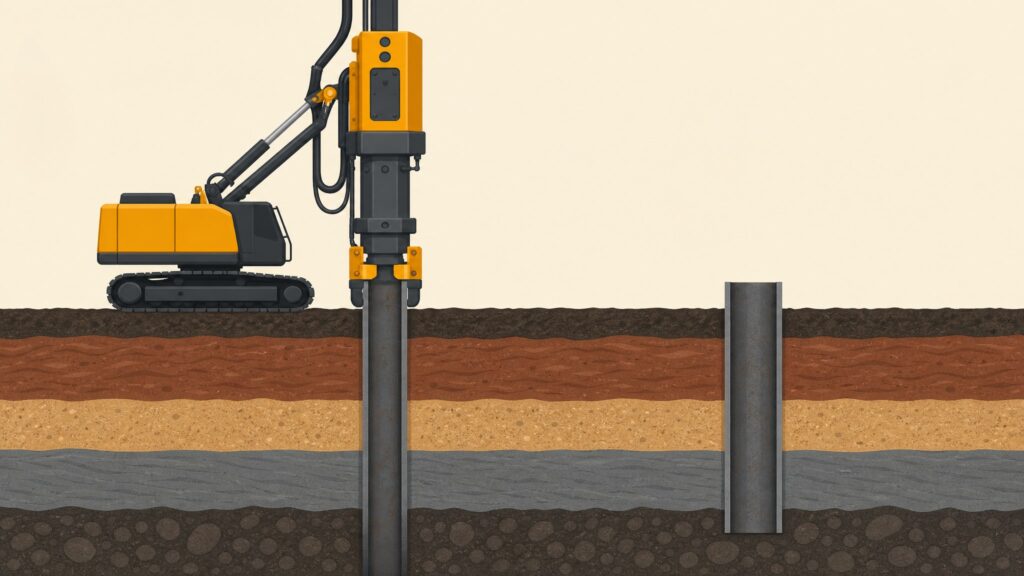
Guardrail installation means repetitive shallow driving in compacted roadside soils, and frequent repositioning with inconsistent alignment wears the lower hammer components faster. Photovoltaic ram operations run across variable ground conditions on large solar farm sites, so inspection schedules need to respond to local geology instead of a uniform calendar.
Visual inspections should record wear measurements on die blocks, check valve clearances, and assess hose condition after each defined operational threshold, which establishes a baseline degradation rate for your fleet. Combine that with recorded operational data, and procurement managers can forecast spare parts needs with enough lead time to avoid unplanned downtime. Detailed service records also back up warranty claims and stand as proof of proper maintenance during resale or audits.
Stocking Strategy for Remote Job Sites
Remote infrastructure projects carry mobilization costs that dwarf the value of individual spare parts, so keeping critical wear components onsite makes economic sense even with the upfront capital outlay. A minimum viable spares kit should include pistons, valve assemblies, die blocks, and seal kits, enough to restore equipment function without waiting on outside delivery.
Procurement managers need to weigh historical failure rates, current project duration, and distance from the nearest supply point when setting stock levels for each equipment type. Consolidating spare parts orders across multiple projects or equipment units cuts per-item shipping costs and simplifies inventory management through standardized component lists. Onsite storage conditions matter just as much: sealed containers with desiccant protect precision components from humidity and contamination during long deployments in harsh environments.
Ordering Air Pile Hammer Maintenance Parts for Diverse Applications
Accurate fulfillment depends on providing serial numbers, application type, and current wear measurements when requesting quotes. Visual identification alone often leads to the wrong part for similar-looking components. International infrastructure contractors serving markets across Europe, the Middle East, Asia, and Latin America need multilingual technical support to specify replacement components accurately and avoid the communication errors that delay shipments.
You should request a spare parts quote with complete equipment identification and operational context, so the supplier can verify compatibility before processing your order. Photographs of worn components alongside dimensional measurements help technical staff confirm part numbers and spot underlying issues that caused the premature failure in the first place.
Application details shape part recommendations, because identical hammers used in different soil types or pile materials wear differently and that changes which component fits best. A hammer driving steel H-piles in rocky terrain needs different wear parts than the same model installing timber posts in sandy soil, even when the base part numbers look interchangeable. Technical support teams use this context to recommend upgraded materials or modified configurations that stretch service intervals for your specific conditions. Including compressor specifications and hose lengths in your inquiry lets suppliers check that auxiliary equipment matches hammer requirements, rather than quietly contributing to wear through weak airflow or poor lubrication.
Technical Support and After-Sales Service for Piling Machinery
Manufacturer technical teams diagnose premature wear patterns by looking at returned components, operational data, and site conditions, then recommend spare parts configurations that address the root cause rather than the symptom. Working directly with the equipment maker also gives access to updated engineering revisions that general distributors don’t carry, including improved materials or redesigned components developed from field feedback across global operators.
Contractors running mixed fleets may also need wear parts for pile extraction equipment, and manufacturer support means cross-compatibility gets verified across equipment categories within the same product family. Technical consultation goes beyond identifying parts. It covers installation guidance, break-in procedures, and operational adjustments that get more life out of each component under demanding conditions.
After-sales service covers troubleshooting for equipment showing abnormal behavior, which can point to incorrect part installation or a mechanical issue that has nothing to do with normal wear. Manufacturer engineers read diagnostic data, review maintenance records, and give targeted recommendations that stop failures from recurring and keep total cost of ownership down.
For contractors running photovoltaic installation rams or other specialized equipment, technical support includes guidance built around their specific duty cycles and environmental exposure, the kind of detail standard documentation doesn’t cover. That’s what separates a manufacturer-direct relationship from a transactional parts order.